The production of Insulating Glass Units (IGUs) involves a careful quality control process to ensure these units meet the industry standards of performance and energy efficiency. One crucial aspect of glass quality control process is the measurement of insulating gas concentration inside the IGU. This article goes through the quality control checkpoints of IGU production, from material handling and sealing to curing, testing and documentation. It also explains why gas fill rate measurement is the step that confirms the thermal performance of sealed units before they leave the factory.
Read also Step-by-Step: Insulating Glass Manufacturing Process Explained
Material Inspection and Selection
Quality control starts before assembly. Glass panes must be free of scratches, inclusions and coating defects. On soft-coat Low-E glass, the coating has to be removed from the edge zone so the sealants bond directly to the glass. Glass must also be clean and dry when it enters the assembly line, because contamination weakens sealant adhesion.
Spacers and sealants should be selected as a system. Not every primary sealant bonds equally well to every spacer material. When a manufacturer changes spacer type, adhesion between the spacer and the sealant should be verified before production.
Desiccant needs protection throughout production. Molecular sieve absorbs moisture even at low humidity. Desiccant-filled spacers left exposed on the shop floor can use up a large part of their capacity before the unit is sealed. Keep desiccant containers and filled spacers closed until assembly. In spacer systems where moisture control is built into the spacer material, follow the supplier’s storage and handling instructions.

Spacer Assembly and Primary Seal
The spacer assembly has a direct effect on the thermal performance of the IGU. Spacer dimensions determine the cavity width, and warm-edge spacers reduce heat loss and condensation risk at the glass edge.
The primary seal, usually polyisobutylene (PIB), is the main barrier against moisture entry and gas leakage. The checks at this stage are:
- Even PIB application. The sealant bead should be continuous, with no skips, gaps or excess material.
- Closed spacer joints. Spacer start and stop joints must be joined tightly and sealed. An open joint lets moisture in, lets gas out, and can release desiccant into the cavity.
- Full wetting after pressing. Inspect the pressed seal with a light. Properly wetted PIB looks uniform and solid black against the glass and spacer.
Checking the first units out of the press after every shift start or setting change shows early whether adjustments are needed. Any defect in the primary seal will later show up as a lower gas fill rate, so these checks are directly linked to the gas measurement later in the process.
Gas Filling Process
The controlled introduction of insulating gases such as argon or krypton into the sealed airspace significantly contributes to the thermal insulation properties of the IGU. An insulating glass unit without insulating gas can have up to 30% higher U-value, meaning weaker insulation, than a unit with a gas fill rate of 85–90%. This stage requires strict compliance with the specified gas concentration. The common minimum gas fill rate for argon-filled units is 85%. Therefore, quality control measures must be in place to verify accurate gas filling, preventing underfilling or overfilling, both of which can impact the unit’s overall production efficiency. Underfilling is a long-term risk. Every sealed unit loses a small amount of gas during its service life. A unit that leaves the factory below specification therefore starts its service life with a reduced margin and loses thermal performance sooner.
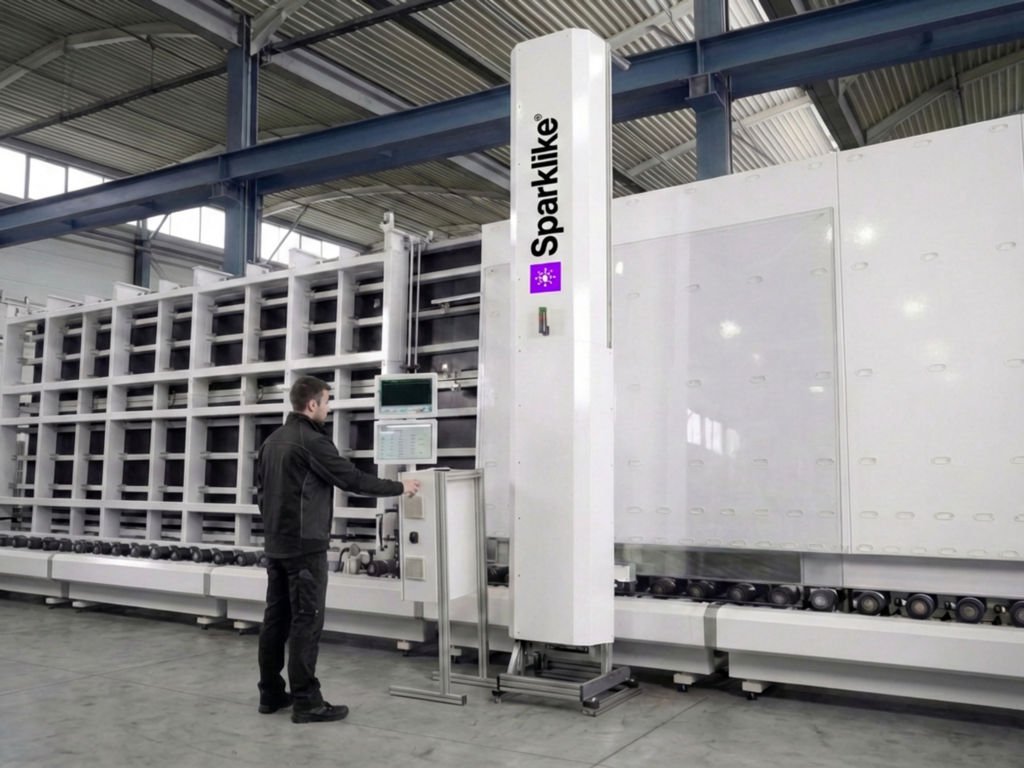
Automated measurement system, Sparklike Laser Integrated pairs well with control of gas fill.
Related reading: Improve Gas Press and Filling Accuracy with Sparklike Laser Integrated™

Sealing Integrity Check
The effectiveness of the gas-filled airspace is contingent on the integrity of the seal. Quality control checks should include accurate assessments of the seals to ensure they are gastight and free from defects. Any compromises in the sealing process can result in gas leakage, altering the insulating gas concentration and, consequently, the IGU’s thermal performance.
Read How to detect Gas Leakage in Insulating Glass Units with Sparklike devices.

Insulating Gas Concentration Measurement
Placing insulating gas concentration measurement at the heart of the quality control process is crucial. Utilizing advanced gas level measurement tools, manufacturers can obtain real-time measurements, allowing for immediate adjustments if gas concentrations deviate from the specified levels. Integrating this measurement into the production line ensures a proactive approach to maintaining product quality. Watch how Pilkington Polska used Sparklike Handheld in their quality control of insulating glass.
Sparklike devices:
- Sparklike Handheld Nova™ – for double glazed insulating glass units
- Sparklike Laser Portable™ – for double and triple glazed insulating glass units with coatings and lamination
- Sparklike Laser Integrated™ insulating gas measurement station integrated to the IG-line – for double and triple glazed insulating glass units with coatings and lamination.
Temperature and Humidity Testing
Beyond gas concentration, the quality control process can involve temperature and humidity testing to simulate real-world conditions. However, this quality assurance is optional and can be hard to execute. Also, if the quality process is done well, the IG units are prepared for the versatile weather conditions. This step ensures the IGUs will perform optimally in diverse climates, further validating the effectiveness of the insulating gas concentration in different environmental scenarios.
Read our article about Foggy Windows, Seal Integrity & How to Ensure Airtight Insulating Glass Units.
Final Inspection and Packaging
The last stage of quality control involves a comprehensive final inspection of each IGU. This includes a review of all components, gas fill rate verification, and a check for any visual defects. Only units meeting the stringent quality criteria should proceed to packaging, ensuring that end-users receive IGUs that meet the highest industry standards.
Documenting the measurement results supports traceability of the gas fill rate for each sealed unit. Sparklike Laser devices store the measurement results in the device memory. With the new Sparklike Handheld Nova, results are stored in the nova.sparklike.com web application, where they can be downloaded as a CSV file and used in the customer’s own quality or production software. Read our blog post about the features of nova.sparklike.com and how to analyse the argon fill data.
Gas fill verification can also continue after the IGUs leave the factory. Installed units can be measured on-site, for example during building commissioning. Read how Sparklike Laser Portable was used in On-site Insulating Glass Inspection for Gas Fill in a Well-known Building.
Conclusion
In the quality control for Insulating Glass Units, the measurement of insulating gas concentration is important part to finalize the process. Placing this measurement to the production process ensures that each IGU delivers on its promise of energy efficiency and optimal thermal performance. By recognizing the significance of insulating gas concentration within the broader quality control framework, manufacturers can guarantee the reliability and longevity of their IGUs, meeting the demands of both regulatory standards and customer expectations.