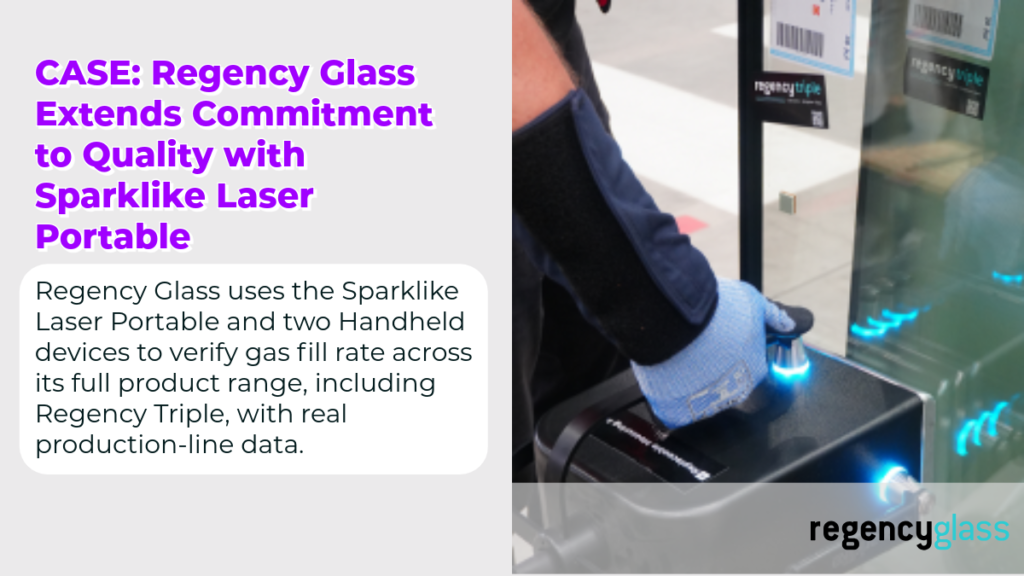
Summary – Why Gas Filling Is Essential for Energy-Efficient Windows
Gas filling in insulating glass units (IGUs) plays a critical role in enhancing insulation, reducing energy loss, and improving comfort. Inert gases like argon, krypton, and xenon slow heat transfer between panes, directly impacting thermal efficiency and sustainability.
- Energy performance: Properly filled IGUs can cut energy loss from windows (up to 30% of a building’s total) and improve U-values by 20–30% compared to air-filled units.
- Comfort & noise reduction: Gas-filled windows maintain stable indoor temperatures and provide better sound insulation.
- Sustainability: Lower energy demand reduces carbon emissions and supports compliance with standards such as Energy Star and the EU Energy Efficiency Directive.
- Quality control: Benefits rely on accurate gas concentration (≥90%), regular leak detection, and advanced testing tools like Sparklike Laser for non-invasive measurement.
Conclusion: Gas filling is a cornerstone of energy-efficient window design. With precise filling and reliable testing, manufacturers can deliver IGUs that meet performance standards while boosting sustainability and customer satisfaction.
When it comes to energy-efficient windows, the role of gas filling in insulating glass units (IGUs) cannot be overstated. While glass materials and coatings are important, the invisible layer of inert gas between the panes plays a decisive role in insulation performance.
Proper gas filling improves thermal insulation, reduces energy consumption, and enhances indoor comfort. In this article, we explain how gas filling works, why gas concentration matters, and how it supports reliable energy-efficient window performance.
What Is Gas Filling and Why Does It Matter?
Gas filling is the process of injecting an inert gas, such as argon, krypton, or xenon, into the cavity between the panes of a sealed insulating glass unit.
These gases are selected because they have lower thermal conductivity than air, which slows heat transfer through the window. When gas filling is done correctly, IGUs lose less energy, maintain more stable indoor temperatures, and reduce heating and cooling demand.
Common gases used in IGUs include:
- Argon: Most used due to its balance of affordability and thermal performance.
- Krypton: Offers higher insulation properties, especially for units with thinner gaps, but at a higher cost.
- Xenon: The most effective but also the most expensive, used in premium applications.
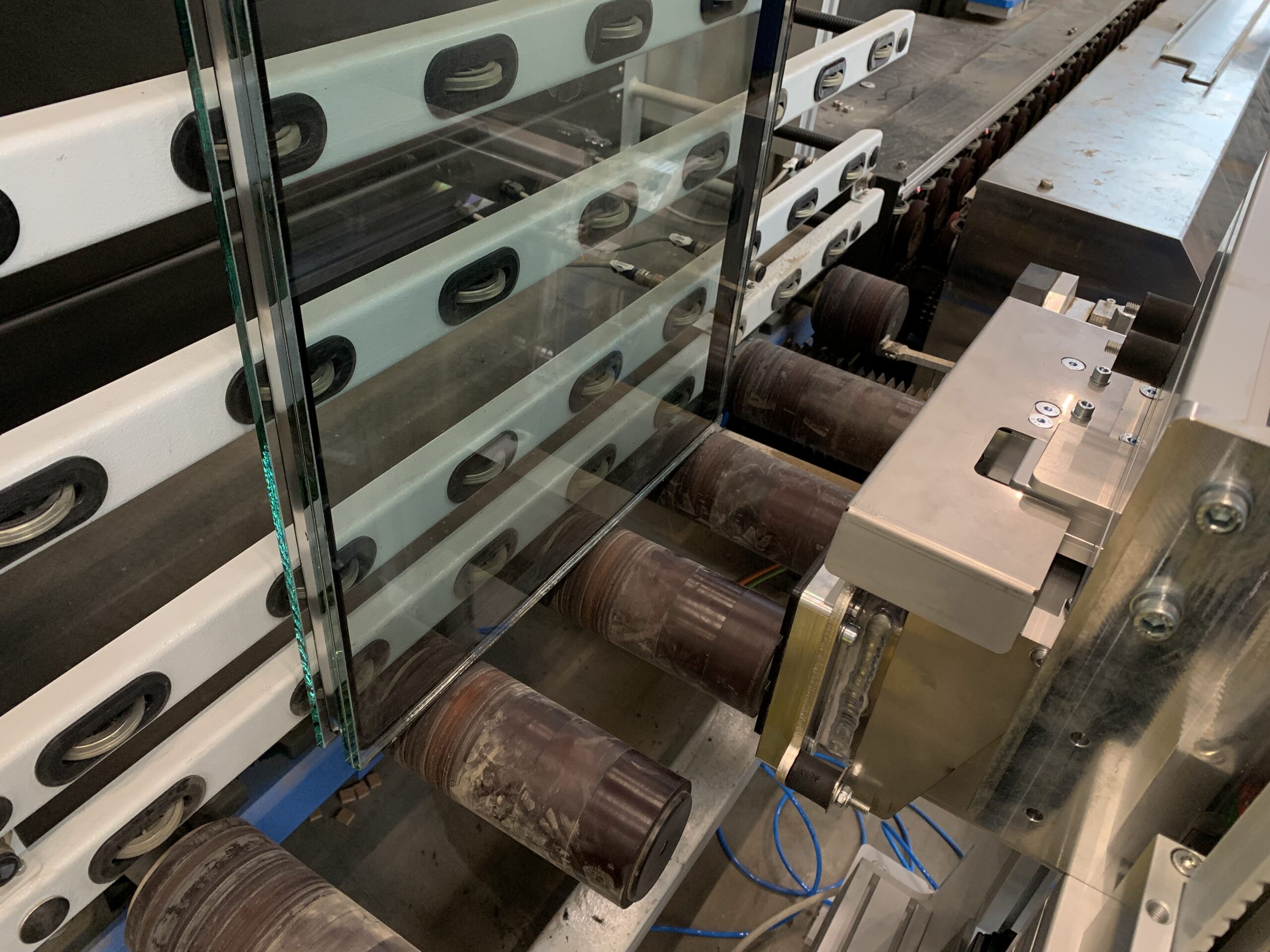
How Argon Gas Filling Machines Are Used in Insulating Glass Production
In insulating glass manufacturing, the gas press is the machine used to fill insulating glass units with argon gas and is often referred to as an argon gas filling machine. Integrated into the insulating glass production line, the gas press introduces insulating gas into the sealed cavity to reach a target gas concentration efficiently. While argon-filled units improve thermal performance, the actual gas fill level depends on both the accuracy of the gas press and the integrity of the sealing process. For this reason, gas filling is typically followed by gas concentration verification to confirm that energy performance targets are met.
How Gas Filling Improves Energy Efficiency
Windows are one of the largest contributors to heat loss in a building. According to the U.S. Department of Energy, windows can account for up to 30% of heating and cooling energy use.
Proper gas filling helps address this in several ways.
Reducing Thermal Transfer
Inert gases reduce both convection and conduction between glass panes. As a result:
- Heat stays indoors during colder periods
- Outdoor heat is better blocked during warmer conditions
For example, argon-filled double-glazed units can improve thermal efficiency by approximately 20–30% compared to air-filled units.
Enhancing U-Value
Gas filling directly affects the U-value (or Ug-value) of an IGU, which measures how much heat passes through the window.
- IGUs with argon fill levels above 90% achieve significantly lower U-values
- Units with insufficient gas content can perform far below specification
In practical terms, an IGU without sufficient gas can have a U-value up to 30% worse than specified.
For example:
- An air-filled double-glazed unit typically has a U-value of around 2.8 W/m²K
- A properly argon-filled unit can achieve values as low as 1.2 W/m²K
The lower the U-value, the better the insulation performance.
Supporting Energy Standards and Certifications
Gas-filled IGUs are essential for meeting modern energy-efficiency requirements and certifications, such as:
- Energy Star, which promote energy-efficient building practices
- National and regional building energy codes, like National Construction Code (NCC) in Australia
Without proper gas filling, compliance with these standards becomes difficult to achieve consistently.
Indoor Comfort and Noise Reduction
Gas filling contributes not only to energy efficiency, but also to indoor comfort.
- Temperature consistency: Reduced heat transfer minimizes cold zones near windows
- Noise reduction: The increased density of inert gases helps dampen sound transmission, which is beneficial in urban or high-noise environments
Sustainability Through Gas Filling
Gas-filled windows support sustainable construction by:
- Reducing heating and cooling energy demand
- Lowering associated carbon emissions
- Aligning with energy efficiency initiatives such as the EU Energy Efficiency Directive
Because energy savings persist throughout the service life of the window, gas filling contributes to long-term environmental performance.
The Importance of Accurate Gas Filling
The benefits of gas-filled IGUs depend entirely on how accurately the gas filling is done and verified during production.
Key considerations include:
- Correct gas concentration: Typically targeting at least 90% fill, as referenced in ASTM E2190-10.
- Leak detection: Identifying seal failures that may cause gas loss over time
- Reliable measurement: Using non-invasive gas analyzers ensures verification without damaging the unit
Without measurement, gas filling quality cannot be confirmed.
Conclusion
Gas filling is not merely a manufacturing step, it is a core requirement for modern, energy-efficient window performance. When gas filling is done correctly and verified, IGUs deliver lower U-values, improved comfort, and reduced energy consumption.
For manufacturers, this means prioritizing accurate gas filling and quality control. For builders and building owners, it ensures that specified performance values are actually achieved in practice.
Contact Sparklike for more information and support on measuring argon concentration in IGUs.
Sources:
Vitro – Pros & Cons of Gas-Filled Insulating Glass Units